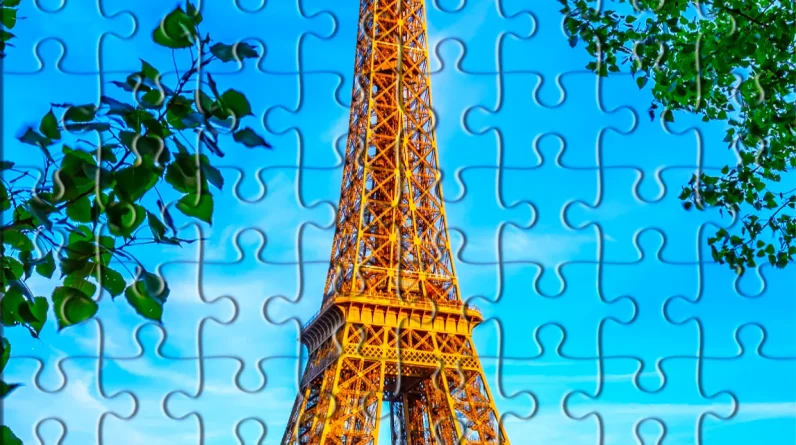
How to Play the Game Jigsaw Puzzle: A Step-by-Step Guide for Enjoyable Puzzle-Solving
Introduction
Hello, readers! Welcome to the world of jigsaw puzzles, where the satisfaction of completing a beautiful masterpiece lies in the journey. Whether you’re a seasoned puzzler or a curious beginner, this comprehensive guide will equip you with the knowledge and strategies to embark on this engaging hobby. So, gather your puzzle pieces and let’s dive into the fascinating realm of jigsaw puzzling!
Choosing the Right Puzzle
Your first step is to select a puzzle that suits your interests and skill level. Jigsaw puzzles come in a wide range of themes, from idyllic landscapes to abstract designs. Begin with puzzles containing a few hundred pieces if you’re a novice. As your skills advance, you can gradually increase the piece count to challenge yourself.
Setting Up for Success
To create a conducive puzzling environment, find a comfortable and well-lit workspace. Lay out a large flat surface, such as a table or a puzzle board, that can accommodate the completed puzzle. Gather all the puzzle pieces and sort them into smaller piles based on their colors or patterns. This organization will streamline the puzzle-solving process.
The Border First
Starting with the border pieces can provide a solid foundation for your puzzle. Identify the straight edges of the image and connect these pieces to form the framework. This step establishes the puzzle’s dimensions and helps you visualize the overall structure.
Working from the Outside In
Once the border is complete, gradually move towards the center of the puzzle. Start by matching pieces on the edges of the sections. As you fill in these areas, the puzzle will begin to take shape and become more manageable. Take your time and don’t become discouraged if you encounter a few challenging pieces.
Using Reference Images
If you find yourself stuck, don’t hesitate to use the puzzle’s box image or a digital reference as a guide. Carefully examining the reference image can help you identify the missing pieces and their approximate locations within the puzzle.
Lighting Conditions
Adequate lighting is crucial for successful puzzling. Natural daylight is ideal, but if you’re puzzling at night, use a bright desk lamp to illuminate your workspace. Good lighting prevents eyestrain and helps you distinguish between similar puzzle pieces.
Troubleshooting Techniques
Don’t give up if you encounter a particularly difficult area. Try these troubleshooting techniques:
- Take a break: Step away from the puzzle for a while and come back with a fresh perspective.
- Flip over the pieces: Sometimes, flipping over the pieces can reveal subtle differences that help you match them.
- Use a magnifying glass: For tiny or intricate pieces, a magnifying glass can provide a closer look and make it easier to identify matching patterns.
Techniques for Solving Jigsaw Puzzles
| Technique | Description |
|---|---|
| Trial and Error | Attempting to fit pieces together until you find a match |
| Color and Pattern Matching | Sorting pieces by color and pattern to make matching easier |
| Shape Recognition | Identifying pieces that have distinctive shapes and connecting them |
| Image Reading | Using the reference image to identify the missing pieces and their approximate locations |
| Logic and Deduction | Analyzing the pieces and the puzzle’s structure to determine which pieces fit together |
Conclusion
Congratulations, readers! You’ve now mastered the essentials of jigsaw puzzling. Remember, patience, perseverance, and a keen eye for detail are key to solving even the most complex puzzles. If you enjoyed this journey into the world of jigsaw puzzles, be sure to check out our other articles on puzzle-solving strategies and tips for choosing the perfect puzzle for your needs.
FAQ about Jigsaw Puzzles
What are the basics of jigsaw puzzles?
A jigsaw puzzle is a dissected picture made of many interlocking pieces. The goal is to assemble the pieces to complete the picture.
What are jigsaw puzzles made of?
Jigsaw puzzles are typically made of cardboard, but can also be made of wood, plastic, or metal.
How do I start a jigsaw puzzle?
Begin by sorting the pieces by color, shape, or pattern to make it easier to find the matching pieces.
How do I find the edge pieces?
Edge pieces are typically plain-colored and have straight edges. Look for pieces that have one or more straight sides.
How do I connect the pieces?
Hold the two pieces at an angle and gently push them together until they snap into place.
What if I can’t find a matching piece?
Take a break and come back to it later. Sometimes, taking a fresh look can help you spot the missing piece.
What if I lose a piece?
If you lose a piece, you can try finding a replacement online or from the puzzle manufacturer.
How do I frame a finished jigsaw puzzle?
Use puzzle glue to hold the pieces together and then place it in a frame with a backing and glass or acrylic cover.
How do I store jigsaw puzzles?
Store puzzles in a cool, dry place in a plastic bag or box.
What are the benefits of solving jigsaw puzzles?
Jigsaw puzzles improve cognitive skills, problem-solving abilities, and hand-eye coordination. They can also be a great way to relax and de-stress.